



Description
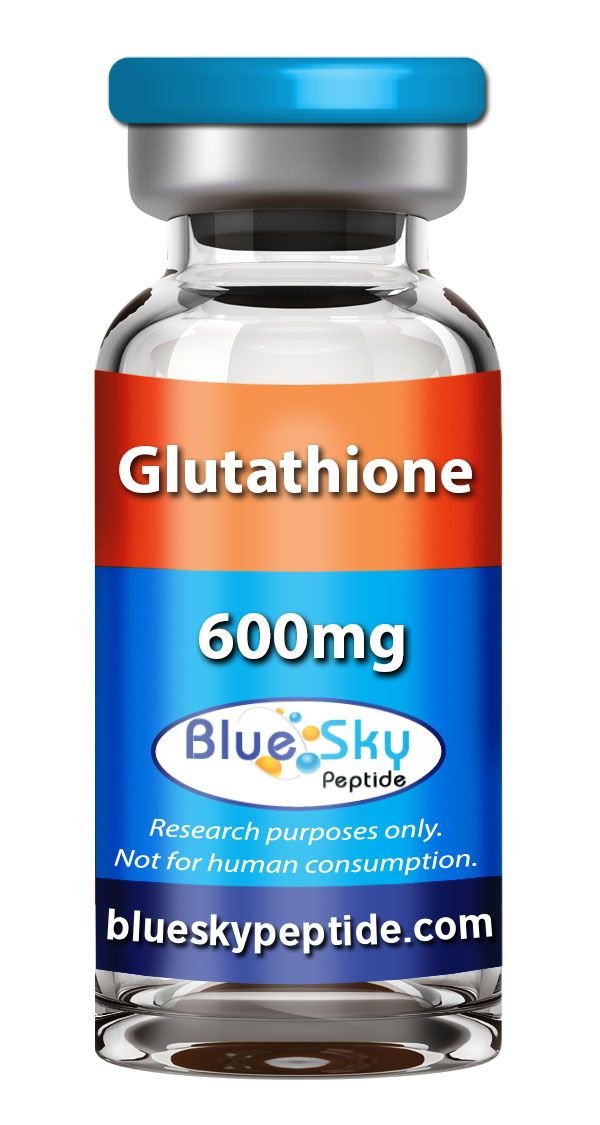
Buy Glutathione-600mg :
| Unit Size | 600 mg/vial |
| Unit Quantity | 1 vial |
| Purity (Mass Spectrometry and UV) | 99.74% |
| Sequence | γ-Glu-Cys-Gly |
| Molecular Formula | C10H17N3O6S | Appearance | Lyophilized White Powder |
| Source | Chemical Synthesis |
| Storage | Lyophilized Glutathione is stable at room Temperature for 90 days, however it is best to store in a freezer below – 8c for any extended period of time.. |
| Terms | The products we offer are intended for laboratory research use only. Please familiarize yourself with our terms of service prior to ordering. |
Glutathione 600mg
View Research Overview & References
Glutathione is a tripeptide composed of glutamate, cysteine, and glycine, and it is widely studied in biochemical and molecular biology research. Its most distinctive feature is the unusual peptide bond between the γ-carboxyl group of glutamate and the amino group of cysteine, giving it structural properties different from conventional α-linked peptides.1 This unique configuration allows Glutathione to participate in a variety of redox reactions and conjugation pathways that are central to cell biology.
Redox and Oxidative Stress Research
Within research environments, Glutathione is frequently investigated for its role in maintaining cellular redox balance. In vitro assays often focus on its reduced form (GSH) and oxidized form (GSSG). The GSH/GSSG ratio serves as a widely used indicator of oxidative stress in laboratory models.2,3 The thiol group of cysteine provides Glutathione with nucleophilic reactivity, enabling it to interact with free radicals, reactive oxygen species, and electrophilic compounds under controlled experimental conditions. These properties make Glutathione a valuable tool for probing oxidative damage, protein thiol modification, and enzymatic activity in biochemical studies.
Enzymatic Studies
Glutathione is also a co-substrate in several enzyme systems. In vitro research often focuses on glutathione peroxidases, which reduce peroxides using Glutathione, and glutathione S-transferases, which conjugate Glutathione with xenobiotic compounds.4,5 These enzyme families are central to laboratory investigations of detoxification, oxidative balance, and redox signaling pathways. Experimental studies have also used Glutathione to examine protein folding, disulfide bond formation, and redox-sensitive transcription factors, making it an indispensable research reagent across multiple biochemical disciplines.
Cellular and Molecular Applications
Beyond enzymatic interactions, Glutathione is widely studied in cell culture systems for its impact on signaling cascades, mitochondrial function, and DNA repair pathways.6,7 Its role as an intracellular thiol buffer makes it a frequent component of in vitro assays designed to mimic cellular oxidative environments. Researchers often employ Glutathione in experiments aimed at understanding apoptosis, cell cycle progression, and metabolic regulation under conditions of oxidative challenge. The compound also serves as a model molecule for investigating thiol-disulfide exchange reactions in proteins and peptides.
Research Compliance and Use
Glutathione is provided strictly for in vitro laboratory research use only. It is not intended for human or animal consumption, nor for use in diagnostic or therapeutic procedures. Any application outside controlled experimental research is strictly prohibited and falls outside the scope of this material’s intended purpose.
References
1. Meister A, Anderson ME. Glutathione. Annu Rev Biochem. 1983;52:711-760.
2. Schafer FQ, Buettner GR. Redox environment of the cell as viewed through the redox state of the glutathione disulfide/glutathione couple. Free Radic Biol Med. 2001;30(11):1191-1212.
3. Forman HJ, Zhang H, Rinna A. Glutathione: overview of its protective roles, measurement, and biosynthesis. Mol Aspects Med. 2009;30(1-2):1-12.
4. Hayes JD, Flanagan JU, Jowsey IR. Glutathione transferases. Annu Rev Pharmacol Toxicol. 2005;45:51-88.
5. Brigelius-Flohé R, Maiorino M. Glutathione peroxidases. Biochim Biophys Acta. 2013;1830(5):3289-3303.
6. Lu SC. Regulation of glutathione synthesis. Mol Aspects Med. 2009;30(1-2):42-59.
7. Franco R, Schoneveld O, Pappa A, Panayiotidis MI. The central role of glutathione in the pathophysiology of human diseases. Arch Physiol Biochem. 2007;113(4-5):234-258.